Best Approval Workflow Software (2026): Top Picks, Pricing Models, and Buying Guide
By Chris Moen • Published 2026-03-15
Looking for the best approval workflow software? See the top tools for 2026, key buying criteria, common pricing models, and when to pick each—plus how Breyta supports approval-heavy, long-running, agent-driven workflows.
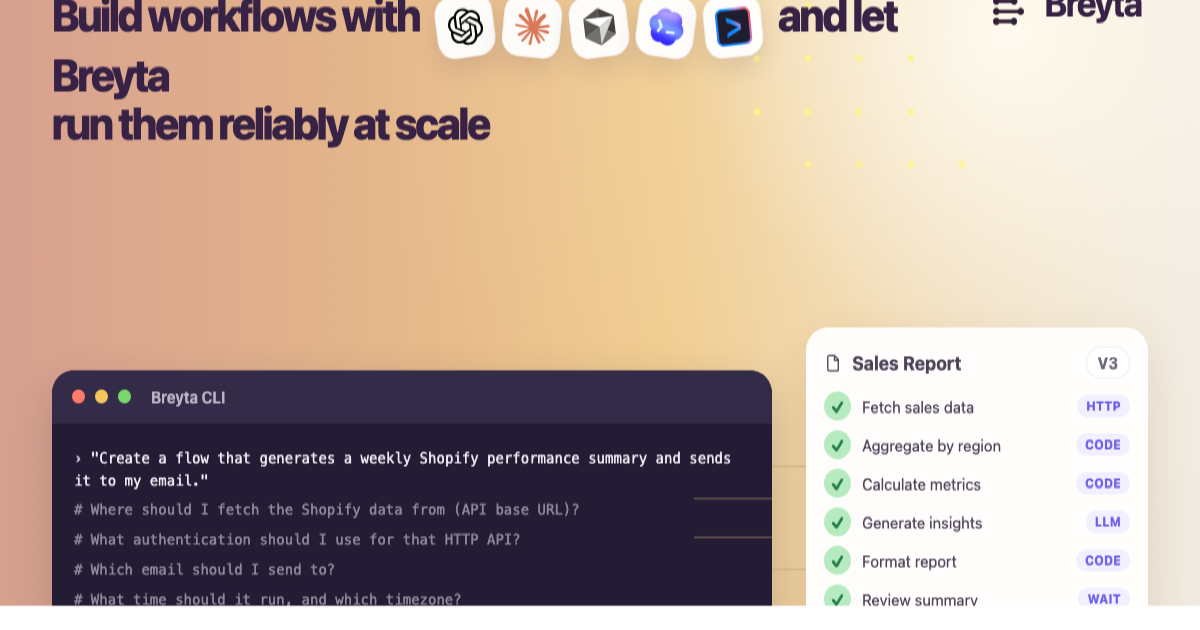
Disclosure: Breyta is our product
Quick answer: The best approval workflow software in 2026
- Adobe Workfront — Best when you need robust audit trails and compliance in enterprise creative or operations approvals.
- monday.com — Best for form-driven routing and board-centric approval flows across business teams.
- Wrike — Best if you want work management with built-in approvals for cross-functional projects.
- Microsoft Power Automate — Best for Microsoft 365-centric orgs standardizing approvals inside the Microsoft stack.
- Smartsheet — Best for spreadsheet-style collaboration with lightweight automated approvals.
- Kissflow — Best for no-code business process automation and standardized approval templates.
- Nintex — Best for process-heavy, forms-centric approvals at scale.
- Breyta — Best for approval-heavy, long-running, or agent-driven workflows that need deterministic execution, clear run history, and versioned releases.
What is approval workflow software?
Approval workflow software moves a request or document through a defined review path. It handles routing, reminders, and sign-offs, and creates an audit trail so you can see who approved what and when. Many tools also integrate with docs, chat, and task systems. For a broader intro to workflow tooling, see this Wrike guide to workflow management software. If you run multi-step or long-running automations, also see our workflow orchestration guide.
Why it matters for production workflows
- Reduces back-and-forth and untracked messages
- Enforces the right sequence of reviewers
- Preserves an audit trail for audits and compliance
- Supports SLAs with alerts and escalations
- Scales better than email and ad hoc scripts
Key buying criteria in 2026
- Flexible routing. Parallel and sequential approvals, conditional paths.
- Clear audit trail. Timestamps, decisions, and reviewer comments.
- Version control. Draft vs live changes, safe rollout and rollback.
- Built-in waits and reminders. Snoozes, deadlines, and escalations.
- Long-running support. Flows that can pause and resume reliably.
- Human in the loop. Approvals, holds, and resumable workflows.
- Operational visibility. Run history and step-level outputs.
- Integrations. Docs, e-sign, chat, ticketing, CRM, and storage.
- Security and access. Roles and least-privilege patterns.
- Pricing clarity. Understand how users, flows, or execution volume affect cost.
- Developer surface. CLI or API for automation at scale.
Top picks and when to choose them
Adobe Workfront
- Best for: Enterprise teams that need strong approval audit trails
- Why it stands out: Often highlighted for compliance-friendly approvals in industry lists like The Digital Project Manager’s roundup where Workfront is “best for approval audit trails” (source)
- Example approval workflow: Creative brief submitted, intake form validation, design lead approval, legal review, brand compliance sign-off, scheduled release
- Pricing approach: Typically enterprise-oriented; confirm per-seat details and add-ons
monday.com
- Best for: Approval forms and board-centric flows
- Why it stands out: Frequently cited as “best for approval forms and boards” in The Digital Project Manager’s list (source)
- Example approval workflow: Vendor request intake board, automatic assignment, finance approval, procurement sign-off, requester notified
- Pricing approach: Tiered plans; advanced automation usually on higher tiers
Wrike
- Best for: Teams that want work management plus approvals
- Why it stands out: Built-in approvals and work management are often noted in vendor roundups like Lark’s article on approval tools (source)
- Example approval workflow: Project deliverable routed to PM, stakeholder review, change requests captured, final approval and handoff
- Pricing approach: Per-seat tiers; feature depth varies by plan
Microsoft Power Automate
- Best for: Microsoft 365-centric organizations
- Why it stands out: Commonly shortlisted for end-to-end approvals inside the Microsoft stack, as seen in approval roundups that include Power Automate (example source)
- Example approval workflow: SharePoint document approval with Teams notifications and OneDrive archiving
- Pricing approach: Mix of user- and flow-based options; confirm specifics for your tenant
Smartsheet
- Best for: Spreadsheet-style collaboration with automated approvals
- Why it stands out: Often included in approval software shortlists for collaborative workflow management (example source)
- Example approval workflow: Budget line item changes trigger manager approval and update a master sheet with status
- Pricing approach: Per-user tiers; check premium feature availability
Lark
- Best for: Unified chat, docs, and approvals in one workspace
- Why it stands out: Promoted as a unified workspace with strong approval flows in its own roundup that also lists Wrike and others (source)
- Example approval workflow: PTO request form in Lark routed to manager, HR notified, employee confirmation in chat
- Pricing approach: Suite packaging; consider total cost across modules
Kissflow
- Best for: No-code business process and approvals
- Why it stands out: Frequently appears in approval workflow shortlists next to Nintex and others (example source)
- Example approval workflow: Capex request with conditional routing by amount and department
- Pricing approach: Plan structure varies by users and capabilities
Nintex
- Best for: Process automation and forms-heavy approvals
- Why it stands out: Often listed for process-centric approval use cases in enterprise environments (example source)
- Example approval workflow: Quality incident report routed through safety, operations, and compliance for multi-level sign-off
- Pricing approach: Typically capability- and usage-based; verify for your scenario
Breyta
- Best for: Approval-heavy, long-running, or agent-driven workflows that need reliability
- Why it stands out: Breyta is a workflow and agent orchestration platform for coding agents. It provides deterministic execution, clear run history, versioned flow definitions, explicit approvals and waits, reusable templates, and an agent-first CLI. It can orchestrate local agents and VM-backed agents over SSH, pause for human approval, and resume later with state intact. Large outputs can be persisted as resources and passed as compact references.
- Example approval workflow: Code-change proposal generated by an agent, routed for human review and approval, then promoted to a live run with versioned release controls
- Pricing approach: Confirm details with the vendor
Pricing in 2026: how vendors charge
You will see a few common models:
- Per user or seat, often with features gated on higher tiers
- Per workflow or environment, sometimes with caps on active flows
- Per automation volume, such as runs, tasks, or step executions
- Per document or transaction, common in e-sign heavy cases
- Add-ons for advanced integrations, governance, and analytics
How to estimate total cost
- Count approvers and requesters; seats can dominate cost
- Map flow complexity; parallel steps and integrations can affect plan choice
- Gauge volume; approvals per month drive usage-based fees
- Check governance needs; audit and retention often live on higher tiers
How Breyta fits approval workflows
Breyta is a workflow and agent orchestration platform for coding agents, built for multi-step automations, long-running jobs, approval-heavy flows, and agent orchestration.
- Approvals and waits. Pause for human confirmation and resume later
- Deterministic runs. Clear run history and step outputs
- Versioned releases. Draft and live targets for safe rollout and promotion
- Long-running jobs. Flows can span hours or days with reliable state
- Agent orchestration. Coordinate local agents and VM-backed agents over SSH
- Resource references. Persist large artifacts and pass compact refs
- Agent-first CLI. Scriptable operations for teams and agents; see the agent-first CLI overview
Common examples include content operations that generate drafts, wait for approval, then publish; autonomous code improvement flows that require human review before apply; and multi-step research pipelines with controlled releases.
FAQ
Is approval workflow software the same as e-sign?
No. E-sign tools capture signatures. Approval workflow software handles routing, review, holds, and sign-off. Many stacks use both together.
Do I need developer skills to run approvals?
Not always. Many tools are no-code. Teams with complex systems or agents can use platforms like Breyta to codify flows with versioning, clear run history, and a CLI.
How do I avoid approval delays?
Use clear routing rules, deadlines, reminders, and escalations. Pick a tool with good visibility and audit logs so bottlenecks are easy to spot.
Closing thoughts
Pick the tool that fits your stack, risk profile, and team size. Start with routing needs, audit depth, and integrations. Then match pricing to your real volume. If you run approval-heavy, long-running, or agent-centered work, consider Breyta for reliable workflow orchestration with deterministic execution, approvals, waits, and versioned releases.
Related reading: Breyta vs Zapier vs Make for Developers: How to choose agent orchestration vs no‑code automation and Designing Fault-Tolerant AI Agent Flows: A Developer's Guide.