Mastering Approval Workflows: A Guide to Efficient and Secure Processes
By Chris Moen • Published 2026-04-21
Learn how to design and implement robust approval workflows that reduce risk, improve traceability, and streamline your operations across various tools and platforms.
Quick answer
To add approvals to a workflow, define the checkpoint, the approver, and the allowed outcomes. Insert an approval step that pauses the flow, notifies the approver, and then resumes based on the decision. Test on staging first, then roll out to production.
What does “approval workflow” mean in practice?
An approval workflow is a structured review gate. A person or group must approve a document, change, or action before the flow continues. This simple shape shows up across tools and teams. See a plain definition in this overview of approval workflows from Wrike.
Common traits:
- A clear trigger and entry criteria
- One or more approvers
- Allowed outcomes like approve, reject, request changes
- Notifications and reminders
- A record of the decision and comments
- A path for timeouts and escalations
Why approvals matter for production workflows
Approvals reduce risk. They also create traceability.
They help when:
- Work is sensitive or irreversible
- A change affects customers or data
- A job runs long or on remote infrastructure
- You need audit history for the decision
- Different roles must sign off
Good approval design keeps momentum. It cuts back-and-forth by providing context at the moment of review.
Core design choices
Decide these up front:
- Who approves
- Single owner, rotating owner, role-based, or group quorum
- Outcomes and branching
- Approve, reject, changes requested, or escalate
- Time and escalation
- SLA, reminders, fallback owner, auto-cancel, or auto-reject
- Evidence to review
- Artifacts, diffs, logs, links, screenshots
- Notifications
- Channel, frequency, and what to include
- Audit and rollback
- Store decisions, comments, and what changed as a result
Common approval patterns with examples
- Single-step approval
- Use when one clear owner exists.
- Example: Content draft approval by the managing editor.
- Two-person rule
- Require two independent approvals.
- Example: High-risk infra change that modifies production credentials.
- Tiered approvals
- Route to level 1 first. Escalate to level 2 on threshold.
- Example: Expense approvals under a set amount go to a manager. Larger ones go to finance.
- Conditional approvals
- Route based on metadata or risk score.
- Example: Only request legal review if a contract clause is present.
- Parallel approvals
- Send to multiple functions at once. Continue when all or a quorum respond.
- Example: Security and compliance must both approve a new vendor integration.
- Change-request loop
- Approver can request edits and send it back to the owner.
- Example: Policy update that needs several rounds of rework.
How to add approvals in popular tools
- Microsoft Power Automate
- Add the Approvals action to a flow. The official docs show how to “Start and wait for an approval” so the flow pauses until a response. See Create and test an approval workflow with Power Automate.
- Jira Service Management
- Add approvals by editing the change workflow and placing approval steps in the right transitions. See Add approvals to your workflow in Jira Service Management.
- StreamWork
- Open an asset, click the approval routing button, and name your approval stage. See How to add approvers to a workflow.
These examples show the same idea. Add an approval gate. Pause. Resume on decision.
Best practices for reliable approvals
- Prove it in staging
- Run the full path on non-production data first. OneUptime suggests starting with staging to remove friction. See How to Create Approval Workflows.
- Keep draft and live separate
- Make changes in draft. Promote only when stable.
- Send context with the request
- Include the diff, key metrics, and links to logs. Reduce guessing.
- Fail closed on timeouts
- Choose what happens if no one responds. Default to safe.
- Capture reasons and comments
- Store the why, not just the yes or no.
- Avoid hidden queues
- Set SLAs and visible backlogs. Escalate when needed.
- Test negative paths
- Reject, escalate, modify, and retry. Make sure the flow handles each.
How Breyta fits this use case
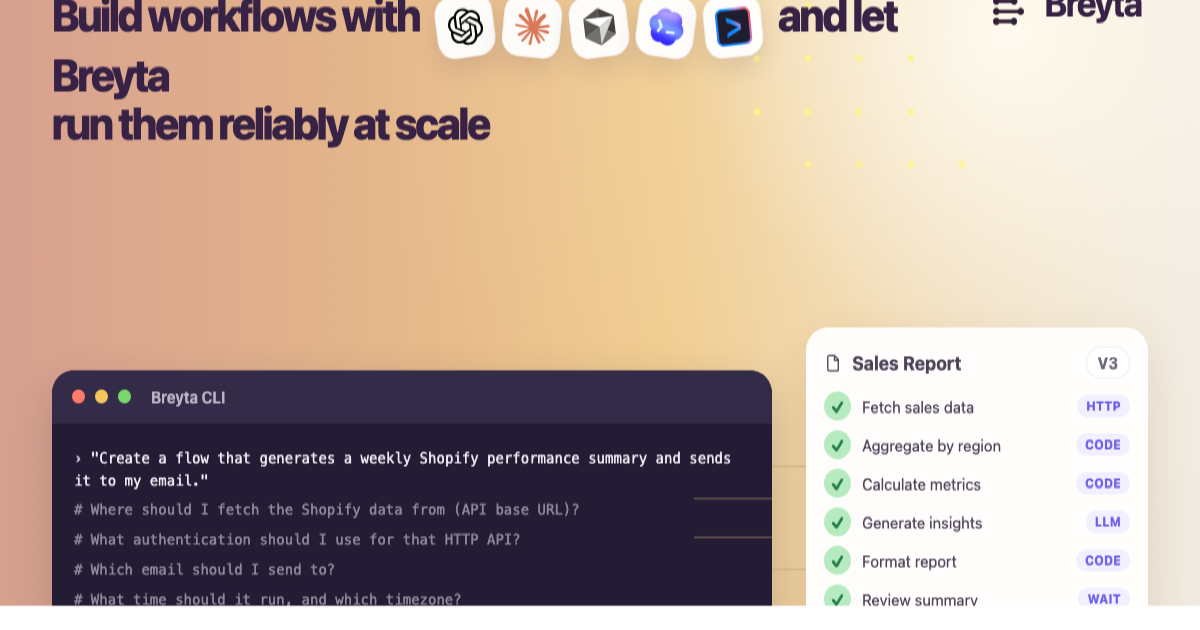
Breyta is a workflow and agent orchestration platform for coding agents. It helps teams build, run, and publish reliable workflows, agent workflows, and autonomous jobs.
Approvals are first-class in Breyta. Flows can pause with wait steps, request human approval in production workflows, and resume later with state intact. You get deterministic execution, clear run history, and versioned releases. Draft and live are split, so iteration is safe.
What this looks like in Breyta:
- Explicit structure
- Triggers, steps, approvals, waits, resource refs, and run history
- Human-in-the-loop
- Wait steps, approvals, external callbacks, and notifications
- Long-running work
- Kick off remote jobs over SSH, pause with a wait, and resume on callback
- Release control
- Versioned flows, draft vs live, immutable releases, promote when approved
- Agent-first CLI
- Stable JSON, scriptable runs, and skills agents can use
Examples Breyta supports today:
- Autonomous code improvement with human oversight for coding agents before apply
- A content operator that drafts posts on a VM, stores memory, requests approval, then publishes approved items
How to add an approval gate in a Breyta flow:
- Model the job as a versioned flow
- Run work up to a decision point
- Add a wait step for approval and notify the approver
- Resume on approval or branch on rejection
- Persist large artifacts as resources and pass compact refs
- Test in draft, inspect step outputs and history
- Release and promote to live when ready
This approach gives you reliable pauses, clear audit trails, and safe rollout.
Quick FAQ
Who should approve?
Pick the person who owns the risk. When unclear, route by role or use a small quorum.
How do I stop bottlenecks?
Define SLAs. Escalate on timeouts. Keep queues visible. Send full context in the request.
What should I log?
Log the request payload, artifacts reviewed, decision, comments, approver identity, timestamps, and the exact release or version that ran.